










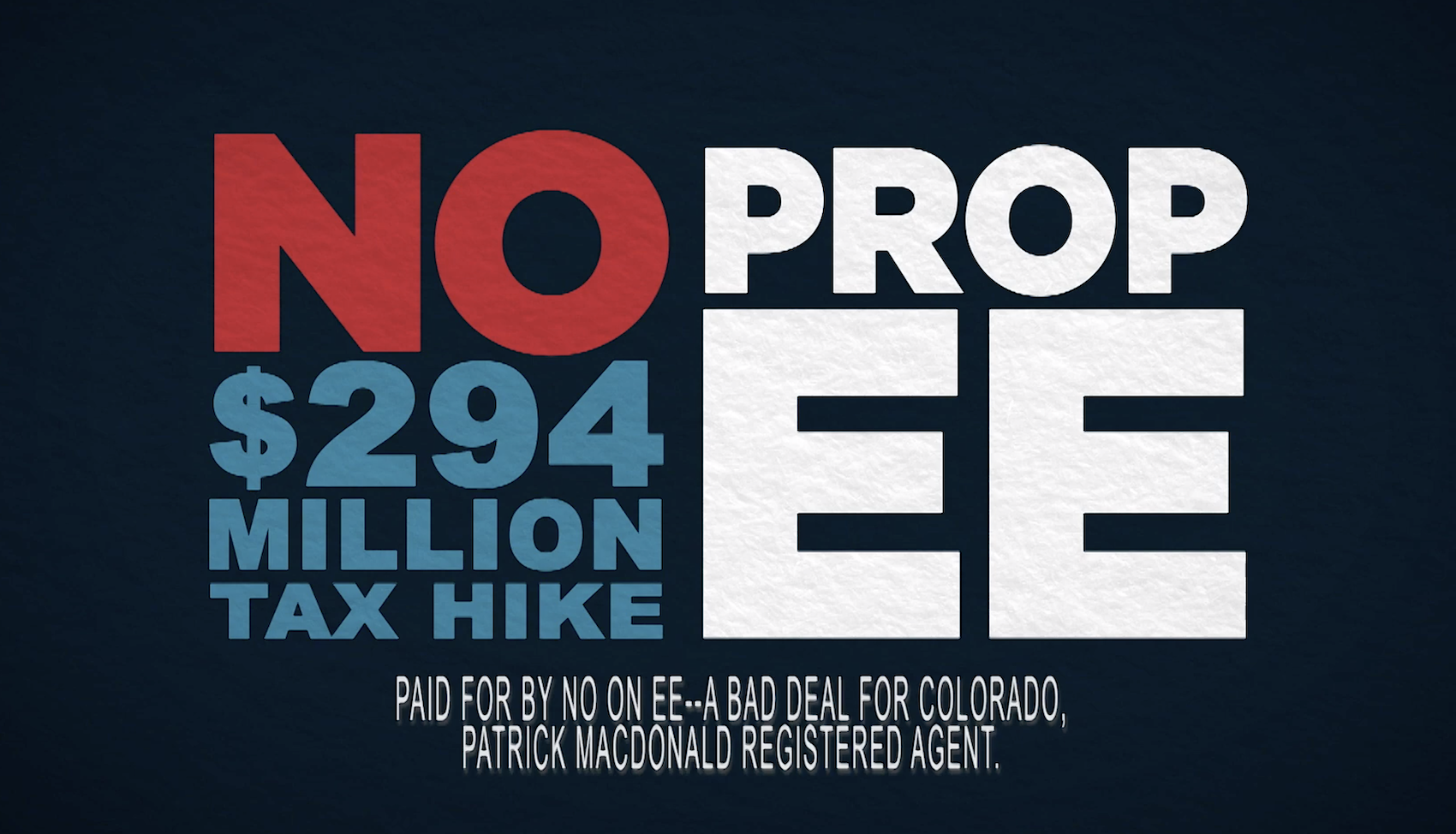
Denver, CO — Colorado slapped a committee opposing a ballot measure with a $30,000 fine for accidentally failing to include the name of its registered agent in its political ads, even though the agent’s name would have provided voters with no useful information.
This type of burdensome requirement violates the First Amendment because it compels speech that serves no legitimate governmental interest.
That’s why the Institute for Free Speech represents the No on EE—A Bad Deal for Colorado committee (“No on EE”) at the Colorado Supreme Court, arguing in a just-filed brief that this requirement compels political speakers to clutter their messages with irrelevant information in a way that infringes on free political speech rights.
No on EE is an issue committee formed to oppose a 2020 tobacco tax measure. No on EE included a disclaimer with the committee’s name in all of its communications, but Colorado fined it for omitting the name of its registered agent. Although No on EE immediately corrected the omission when notified, state officials nonetheless imposed the penalty. The Colorado Court of Appeals ruled the requirement unconstitutional, prompting the state’s appeal to the Supreme Court.
“Registered agents are typically attorneys or filing services who simply receive legal documents—they don’t fund campaigns, make decisions, or have any connection to the political message,” said Institute Senior Attorney Owen Yeates. “Colorado’s requirement forces committees to waste valuable space on every communication with information that serves no purpose except to create compliance traps for political speakers.”
The Institute’s brief argues that the requirement fails constitutional scrutiny because:
- No legitimate interest exists: Unlike donors or officers, knowing the registered agents’ names tell voters nothing meaningful about who supports or opposes a ballot measure. They’re merely designated recipients for legal paperwork.
- The burden outweighs any benefit: Committees must include this irrelevant information on every communication—from billboards to brief social media posts—or risk substantial fines for inadvertent omissions.
- Less restrictive alternatives exist: Colorado can publish the information on the Secretary of State’s website where other campaign finance information appears. Alternatively, even though it still burdens speakers by taking up part of their communications, Colorado could require that communications name committee officers or other actual decision-makers—people with genuine connections to the campaign’s message.
The requirement exemplifies how government experimentation with disclosure and disclaimer mandates can become ever more disconnected from any legitimate governmental interest while imposing significant compliance costs and legal risks. As political communications increasingly occur through character-limited formats like social media, forcing inclusion of irrelevant information becomes particularly burdensome.
The Colorado Court of Appeals recognized these First Amendment problems when it struck down the requirement. Now, the Colorado Supreme Court must decide whether the state can continue compelling political speakers to include meaningless information that only serves to chill protected speech through the threat of penalties.
To read the Institute’s Colorado Supreme Court filing in the case, Kline, et al. v. No on EE—A Bad Deal for Colorado, click here. To read more about the case, please see our case page here.
About the Institute for Free Speech
The Institute for Free Speech promotes and defends the political speech rights to freely speak, assemble, publish, and petition the government guaranteed by the First Amendment.