








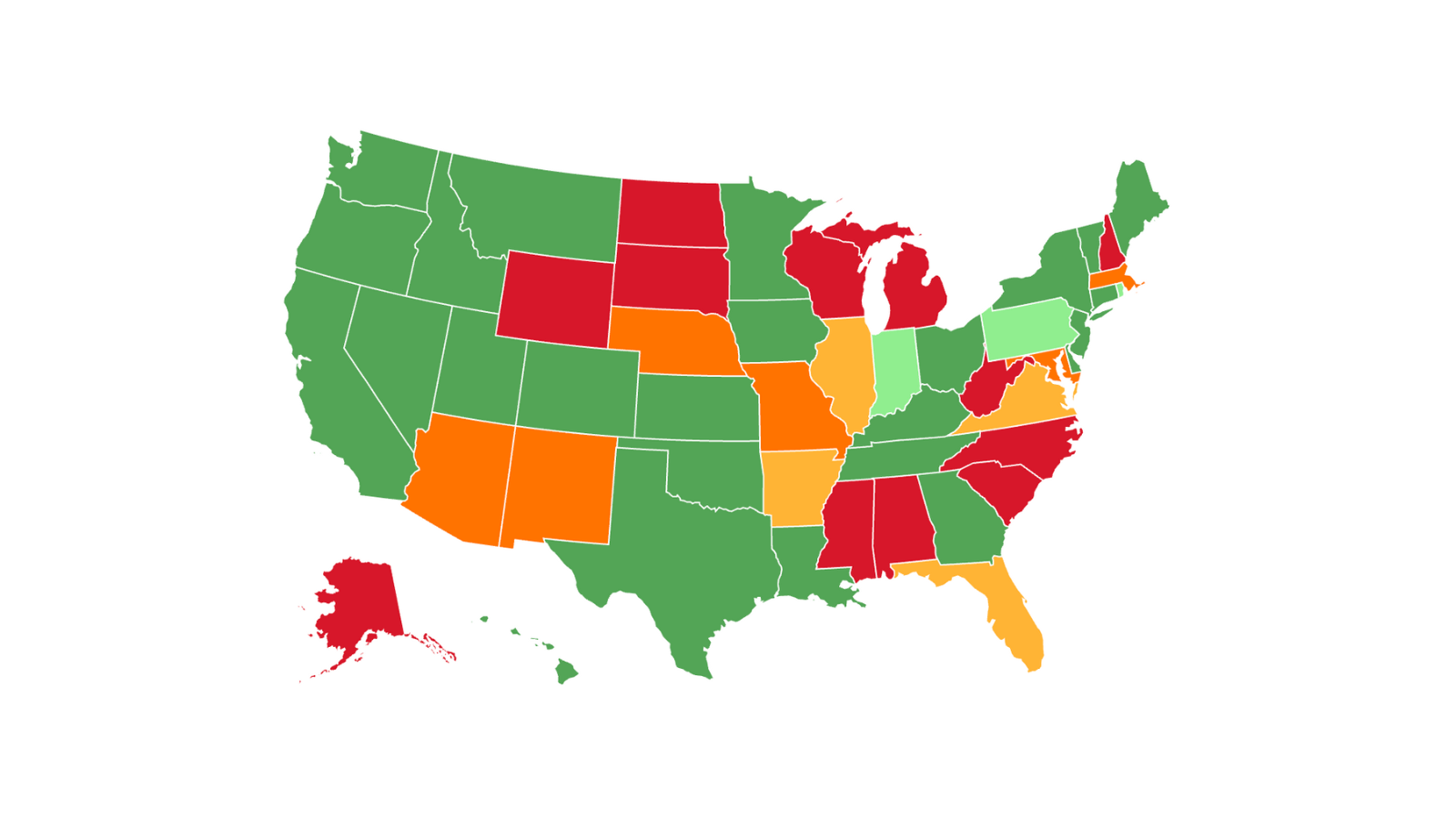
NOTE: This blog post will provide updates on the states that have enacted new or improved existing anti-SLAPP laws since the September 2025 publication of our Anti-SLAPP Report Card.
March 16, 2026: South Dakota Becomes the 40th State in the Union to Enact Anti-SLAPP Protections
On March 16, Governor Larry Rhoden signed Senate Bill 137 into law, making South Dakota the 40th state to provide its citizens with statutory protections against Strategic Lawsuits Against Public Participation (SLAPPs). SLAPPs are frivolous lawsuits designed to silence, intimidate, and drain the financial resources of critics.
By enacting this crucial legislation, South Dakota officially adopts the Uniform Public Expression Protection Act (UPEPA), a model statute drafted and approved by the nonpartisan Uniform Law Commission (ULC). With the adoption of UPEPA, South Dakota sheds its status as one of the few remaining states without free speech safeguards and joins a rapidly growing movement enacting the gold standard for anti-SLAPP legislation.
For nearly two decades, free speech advocates faced a daunting uphill battle in Pierre. A proposed anti-SLAPP bill died in a House committee in 2007, and subsequent efforts repeatedly stalled, leaving South Dakotans uniquely vulnerable to retaliatory litigation. While much of the country modernized its legal frameworks to protect citizen voices, South Dakota remained a glaring holdout. The passage of SB 137 finally breaks this long legislative drought.
The legislation received overwhelming, bipartisan support. The measure cleared the Senate unanimously, 33-0, on February 9, and subsequently passed the House of Representatives by a decisive 65-2 margin on March 5.
Prior to this enactment, the Institute for Free Speech’s Anti-SLAPP Report Card gave South Dakota an “F” for its total lack of statutory protections. Thanks to UPEPA’s comprehensive framework, South Dakota’s score will see a significant improvement in the next evaluation.
The new law introduces several critical procedural safeguards. It allows defendants targeted by a SLAPP to file a special motion for expedited review and early dismissal. To protect individuals from being financially drained during this process, the law mandates a discovery stay that halts costly and burdensome discovery proceedings until the motion is fully resolved. Additionally, the legislation features a robust cost recovery provision ensuring that defendants who successfully have a SLAPP dismissed can recover their attorney’s fees and court costs, deterring plaintiffs from filing abusive lawsuits in the first place.
The Institute for Free Speech commends the South Dakota Legislature, Governor Rhoden, and the bill’s primary sponsors, Senator Amber Hulse and Representative Logan Manhart, for their decisive action to protect the constitutional rights of all South Dakotans.
To learn more about our country’s anti-SLAPP statutes, read the Institute’s 2025 Anti-SLAPP Report Card here.
December 23, 2025: Michigan Becomes the 39th State to Adopt an Anti-SLAPP Law
Michigan has officially joined the ranks of states providing robust protections against frivolous, speech-chilling litigation. With Governor Gretchen Whitmer’s December 23, 2025 signature on House Bill 4045, Michigan became the 39th state in the nation to enact a comprehensive statute protecting speakers from strategic lawsuits against public participation, commonly known as “SLAPPs.”
By adopting this legislation—a version of the Uniform Public Expression Protection Act (UPEPA)—Michigan has moved from a state with no protections to a national leader in safeguarding public discourse. The new law provides residents with a vital shield against SLAPPs. These meritless lawsuits are typically filed by powerful interests not to win a legal judgment, but to silence critics, journalists, and activists by burdening them with the high cost of a legal defense.
The legislation saw overwhelming support in the Michigan Legislature, reflecting a broad consensus that protecting public discourse is a nonpartisan priority. House Bill 4045 passed the House of Representatives with a unanimous 103-0 vote on October 22, 2025. Following its success in the House, the bill moved to the Senate, where it was approved by a vote of 36-0 on December 18, 2025.
Until now, Michigan was one of the few remaining states without any dedicated anti-SLAPP statute, earning an “F” grade from the Institute for Free Speech in our Anti-SLAPP Report Card. This lack of protection left residents vulnerable to predatory litigation that could drag on for years, even when the underlying claims were clearly baseless. By becoming the 39th state to enact these protections, Michigan has ended its status as a “SLAPP-friendly” jurisdiction.
Under the new statute, defendants targeted by a SLAPP suit can file a special motion for expedited relief. This triggers several key protections that follow the “gold standard” for free speech reform:
- An Immediate Stay of Discovery: The law freezes the expensive and time-consuming discovery process while the court determines if the lawsuit has merit.
- Expedited Judicial Review: Courts are required to hear anti-SLAPP motions quickly, ensuring that frivolous cases are dismissed at the earliest possible stage.
- Fee-Shifting Provisions: To deter future SLAPPs, the law requires plaintiffs who file meritless suits and lose the anti-SLAPP motion to pay the defendant’s reasonable attorney fees and legal costs.
- Right of Appeal: Defendants have the right to an immediate appeal if a trial court wrongly denies an anti-SLAPP motion.
In previous assessments of state laws, the Institute for Free Speech noted Michigan’s total lack of statutory protections. The enactment of HB 4045 represents a massive leap forward, bringing the state into alignment with the best practices for protecting this fundamental constitutional right.
This reform ensures that whether a citizen is speaking during public comment time at a local government meeting, a journalist is reporting on government corruption, or a consumer is posting a critical review online, they can do so without fear of financial ruin from a retaliatory lawsuit.
Many individuals and organizations made this achievement possible in Michigan after years of dedicated work. Special thanks go to State Representative Kara Hope, the lead sponsor of this crucial legislation, and to Gov. Whitmer for signing it into law. We also thank the countless activists and organizations who showed up at hearings, testified, and worked to make this law possible.
Michigan’s milestone as the 39th state to adopt robust anti-SLAPP protections marks a new era for the Wolverine State as a defender of the right to speak, petition, and publish.
To learn more about our country’s anti-SLAPP statutes, read our 2025 Anti-SLAPP Report Card here.