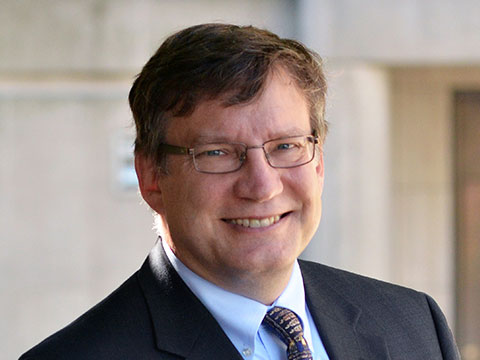









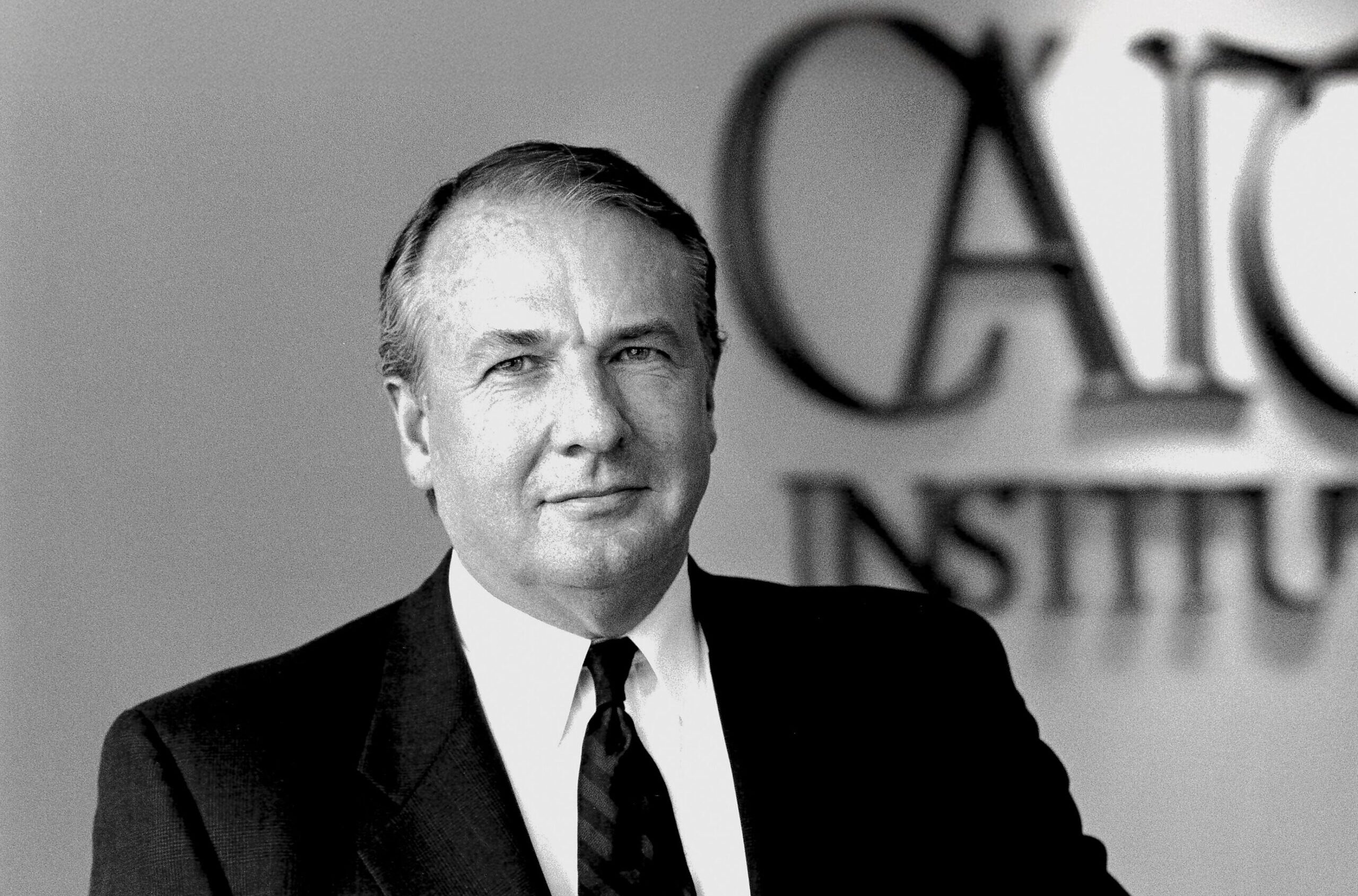
The Institute for Free Speech today mourns the death of our long-time member of the Board of Directors, Edward H. Crane. Ed did more important work in his career, in particular founding and nurturing the Cato Institute, but it is fair to say that Ed Crane was one of a handful of people without whom there would be no Institute for Free Speech.
Ed was also one of the handful of people without whom my own career would be radically different. Having seen first-hand how campaign finance laws stifled political change and minority views through his work with the Libertarian Party and Ed Clark’s 1980 campaign for President, Ed Crane always retained a deep interest in and passion for freeing the campaign finance system from the morass of government regulations passed in the 1970s. In fact, it is often forgotten that he was one of the original plaintiffs in the landmark campaign finance case, Buckley v. Valeo (he often expressed, with his typical sarcasm, his disappointment that the case had not been captioned “Crane v. Valeo.”)
In the fall of 1994 Ed spotted a short op-ed I had written for the Washington Times. Through his longtime associate, David Boaz, I was asked if I would write a longer piece for the Cato Institute. I did. The ideas I explored for Cato later grew into my first significant academic work in the field, Faulty Assumptions and Undemocratic Consequences of Campaign Finance Reform, which appeared in the Yale Law Journal. And it was thanks to Cato’s broad circulation of my original Cato paper that I came to the attention of lawmakers in Washington, most significantly the great Senator Mitch McConnell. That, in turn, led eventually to my appointment as a Commissioner at the Federal Election Commission. After I was confirmed by the U.S. Senate, we had a public celebration at the Cato Institute, at the close of which Senator Buckley himself administered the oath of office. It’s because of Ed that my career has had public impact, and on a personal level, through Ed that I had the honor of meeting so many luminaries of freedom, such as Milton Friedman, or Senator Buckley himself.
After my term on the FEC, Ed was instrumental in helping to found the Institute for Free Speech–originally called the Center for Competitive Politics, a name Ed came up with (nobody’s perfect). With a brief interlude, Ed served on the Board of IFS from its founding, promoting the Institute through Cato and personally. He provided advice and leads on raising funds, and counsel on our early organization and activities. And any time I needed some bucking up on the importance of the fight, Ed was there.
Ed Crane is a person who, in countless ways and with tireless effort, worked to make the world a freer place. I think that is about as high an honor as one can earn. Our heartfelt condolences to Kristina, and to Ed’s countless friends.
Ed Crane, R.I.P.