Tax-financed campaigns are government-operated programs that seek to replace or supplement private, voluntary campaign contributions with government grants of taxpayer dollars to candidates who meet certain requirements. These programs, often tagged with euphemistic names such as “democracy dollars” or “clean elections,” take many forms. Some provide tax dollars to candidates based on the donations they’ve received while other programs provide…
The Institute for Free Speech writes to express serious concerns about the devastating effect H.R. 1 would have on Americans’ freedom of speech and ...
A new poll from progressive supporters of H.R. 1 misleads about the bill's impact and ignores the many restrictions the legislation imposes on First ...
H.R. 1 and S. 1 would impose sweeping new restrictions on speech about campaigns and public affairs. The Institute for Free Speech has created ...
In the midst of a devastating pandemic and plummeting tax revenue, New York’s new budget law gives millions of tax dollars to politicians for ...
At the most recent Democratic debate, former Vice President Joe Biden played into the disproven narrative that taxpayer-financed campaigns improve democracy. Biden’s platform calls ...
Taxpayer-financed campaigns are a bad idea. The latest evidence comes from the D.C. Council, where longtime incumbent Jack Evans recently “resigned in disgrace” from ...
On Election Day, Albuquerque residents registered their opinion on a ballot initiative that, if approved, would have forcibly used their tax dollars to finance ...
For the 2020 election, the DNC has decided to try out a new requirement for its presidential primary contenders to qualify for the debates. ...
PDF available here By Eric Wang, Senior Fellow[1] One way to better understand how H.R. 1 would affect nonprofit civic and advocacy groups is ...
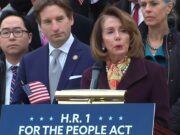
The Institute for Free Speech writes in strong opposition to H.R. 1, the “For the People Act.” More appropriately known as the “For the ...